



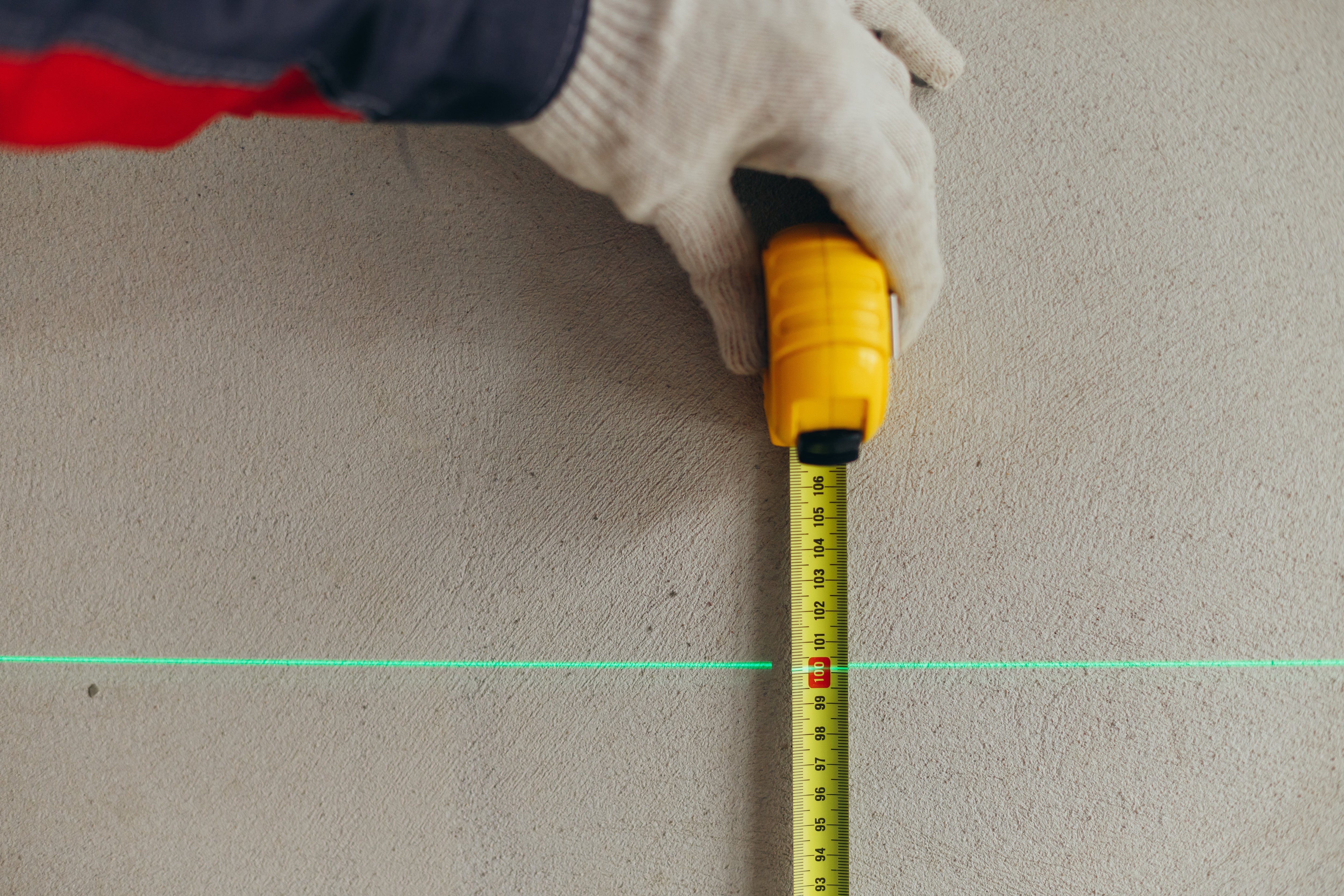
When measuring a Shade Sail—especially on sloping ground—it’s important to determine the relative heights of each fixing point (or pole) rather than simply measuring from the ground to the top of the pole. This ensures the sail will be tensioned correctly and achieve the intended slope or shape. Below is a step-by-step guide to measuring these heights correctly:
“Relative Height” Matters
- Ground levels can be misleading. If your site is sloped or uneven, measuring each pole from the ground up will not give the true height differences between fixing points.
- Proper tensioning depends on height differences. Shade Sails often need a certain slope for water run-off, wind resistance, or aesthetic reasons. Getting the relative heights correct ensures the sail performs as intended.
Establish a Horizontal Reference Point
You’ll need a level reference line that’s truly horizontal. You can create one in a few ways:
- Laser Level (Preferred): A laser level will project a perfectly horizontal line onto each pole or nearby surface.
- String Line and Spirit Level: If you don’t have a laser, stretch a string line between the posts and use a spirit level to make sure it’s perfectly horizontal. You can start at the first post, then wrap the string around each post in turn, pull it tight and tie it off back at the starting point.
Mark the Reference on Each Pole (or Fixing Point)
- Once you have a horizontal line established at a convenient height (for example, waist-high), project (or stretch) it so that it touches or crosses all potential fixing points.
- On each pole or wall bracket location, make a clear mark at the height where the laser beam or string line touches.

Measure From the Reference Mark to the Proposed Sail Attachment Point
Now that every pole or wall bracket has a horizontal reference mark:
- Measure vertically from the reference mark up to where the sail hardware will attach (the “fixing point”).
- Record this measurement for each post (or wall bracket).
This measurement tells you exactly how much higher (or lower) each attachment point is, relative to the same reference level.
Now all you need to do is capture these exact measurements on your Shade Sail plan, and you'll be ready to order your Custom Shade Sail in no time!




Share:
The Importance of Varying Heights for Shade Sail Mount Points
Modern Design Ideas for an Elevated Balcony