



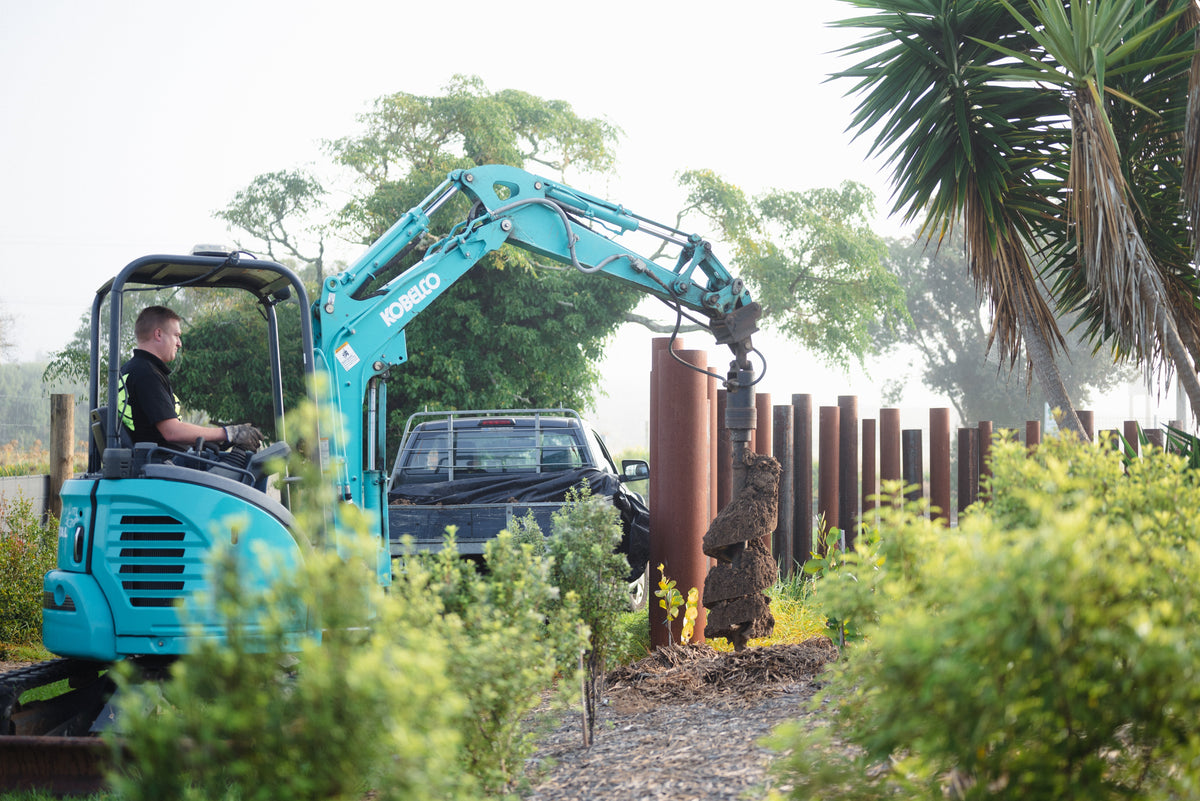
If you are thinking about a DIY Shade Sail installation, the main question is usually this:
Do you want to do the whole job yourself, or get a local contractor or builder to help with some parts?
For many homeowners, the best option is to do the easier parts yourself and get help with the heavier or more difficult work.
You might be happy to plan the layout, measure the fixing points and order your Shade Sail once everything is ready.
However for jobs such as digging deep footings, installing steel posts, adding structural fixings to the house or even managing the final installation can sometimes be jobs customers would rather hand over to someone else.
This guide will help you decide what you can comfortably do yourself and where getting some help may be worthwhile.
What Is Involved in a DIY Shade Sail Installation?
A typical Shade Sail project can be broken into a few main jobs.
1. Plan the Shade Area
Deciding where you want the shade to fall and then planning where your mounting points will need to go to ensure your Shade Sail will cover the area you actually want shaded.
2. Install the Mounting Points
A Shade Sail needs strong mounting points. These could be structural steel posts, suitable fixings on the house, or a combination of both. If installing steel posts, these can often be the hardest part of the project.
3. Measure the Finished Fixing Points
Once the posts and other fixing points are installed, take the final measurements. For a custom-made Shade Sail, always take your final measurements once all your fixing points are installed.
4. Order the Shade Sail
With your final measurements, you can then order your custom-made Shade Sail to suit the exact measurements of your finished layout.
5. Install and Tension the Shade Sail
Once the sail arrives, connect each corner to the fixing points and gradually tension it until the fabric is sitting firmly and evenly. Besides installing any posts, this can often be the next most challenging part of the project, particularly for larger Shade Sails or higher fixing points.

Which Parts Can You Usually Do Yourself?
If you are comfortable with normal home improvement jobs, there is quite a lot you may be able to do yourself.
You can plan the Shade Sail layout, decide where the mounting points will go, and work out the size and shape Shade Sail that will suit your area.
Once the fixing points are in place, you can take the final measurements yourself. And then you can then use those measurements to order your custom-made Shade Sail and select the fixing hardware needed for your project. You may need a second person to assist you with measuring.
Where the Job Gets Harder
Some parts of a Shade Sail project can be more demanding than others.
Installing posts and footings is often the biggest job because it can involve heavy lifting, digging, concrete work, and getting each fixing point positioned correctly.
Fixing a Shade Sail to the house can also be more difficult. A Shade Sail should not simply be attached to a gutter or lightweight fascia board. The fixing needs to connect back to suitable structural framing. If you are not sure what is behind the fascia, roof edge, or wall, this may be a good job for a local builder or contractor.
Installing the finished Shade Sail can also be challenging for some people, especially with larger sails or higher fixing points. The sail needs to be lifted into place, connected to the hardware, and then tensioned evenly. We always recommend having at least one other person assist you with these steps if you do decide to DIY.
These are the stages where getting help from a local contractor or builder may be worthwhile if you would prefer not to handle the heavier, more physical, or more technical parts of the project yourself.
Think About Working at Height
Shade Sail mounting points are normally well above head height. That means you will likely need to use a ladder when installing, measuring or attaching to these.
Ask yourself whether you are comfortable climbing the ladder, reaching the fixing point, and handling the Shade Sail hardware at the same time. You may be completely comfortable doing the measuring and planning but prefer someone else to handle the installation of higher mounting points.

DIY Shade Sail Installation vs Contractor
|
Job |
DIY Difficulty |
Contractor Help |
|
Planning the shade area |
Easy |
Rarely |
|
Choosing the layout |
Easy |
Rarely |
|
Installing Mounting Points on a house |
Moderate to Difficult |
Recommended |
|
Digging post footings |
Difficult |
Recommended |
|
Installing steel posts |
Difficult |
Recommended |
|
Measuring for your Shade Sail |
Moderate |
Optional |
|
Ordering the Shade Sail and hardware |
Easy |
Rarely |
|
Installing the Shade Sail |
Moderate to Difficult |
Optional |
|
Tensioning the Shade Sail |
Moderate |
Optional |
Note: This is a guide only and the difficulty of each step will vary depending on the size of your Shade Sail, height of the mounting points, site access, and your own tools and experience.
You Can Do Part of the Job Yourself
You do not need to choose between doing everything yourself and paying someone to do everything.
A common option is:
- Plan the Shade Sail layout yourself.
- Have a local contractor or builder install the steel posts, footings, or house fixings.
- Measure the finished fixing points yourself.
- Order the custom-made Shade Sail.
- Install and tension the Shade Sail yourself .
This keeps a large part of the project DIY while avoiding some of the hardest physical work.
Should You Fully DIY Your Shade Sail Installation?
A DIY Shade Sail installation can be a good project if you are comfortable with home improvement work and have the required tools and skills.
Planning the layout, measuring the finished fixing points, and ordering your custom-made Shade Sail are all parts most homeowners can usually manage themselves.
The more demanding parts are installing posts and footings, adding suitable structural fixing points, and installing and tensioning the finished Shade Sail.
If you are comfortable taking on those jobs, you may decide to complete the full installation yourself. If not, a local contractor or builder can help with the more physical or difficult stages while you handle the rest of the project.
Use the Shade Space installation guides and Shade Sail measuring guides to work through each stage and decide which parts you are comfortable completing yourself.










Share:
Home Projects for Newly Retired Couples
How a Shade Sail Can Save You Electricity